WASTE2NOURISH / CAMPUS PILOT OVERVIEW
TURN CAMPUS FOOD WASTE
INTO LOCAL RESOURCES.
Black soldier fly larvae eat prepared campus food scraps inside a mobile learning lab. The pilot is designed to measure material recovery, support applied research, and give students a role in the work.
Pilot development context: Michigan State University, per W2N records. See the pilot scope and documented installation.
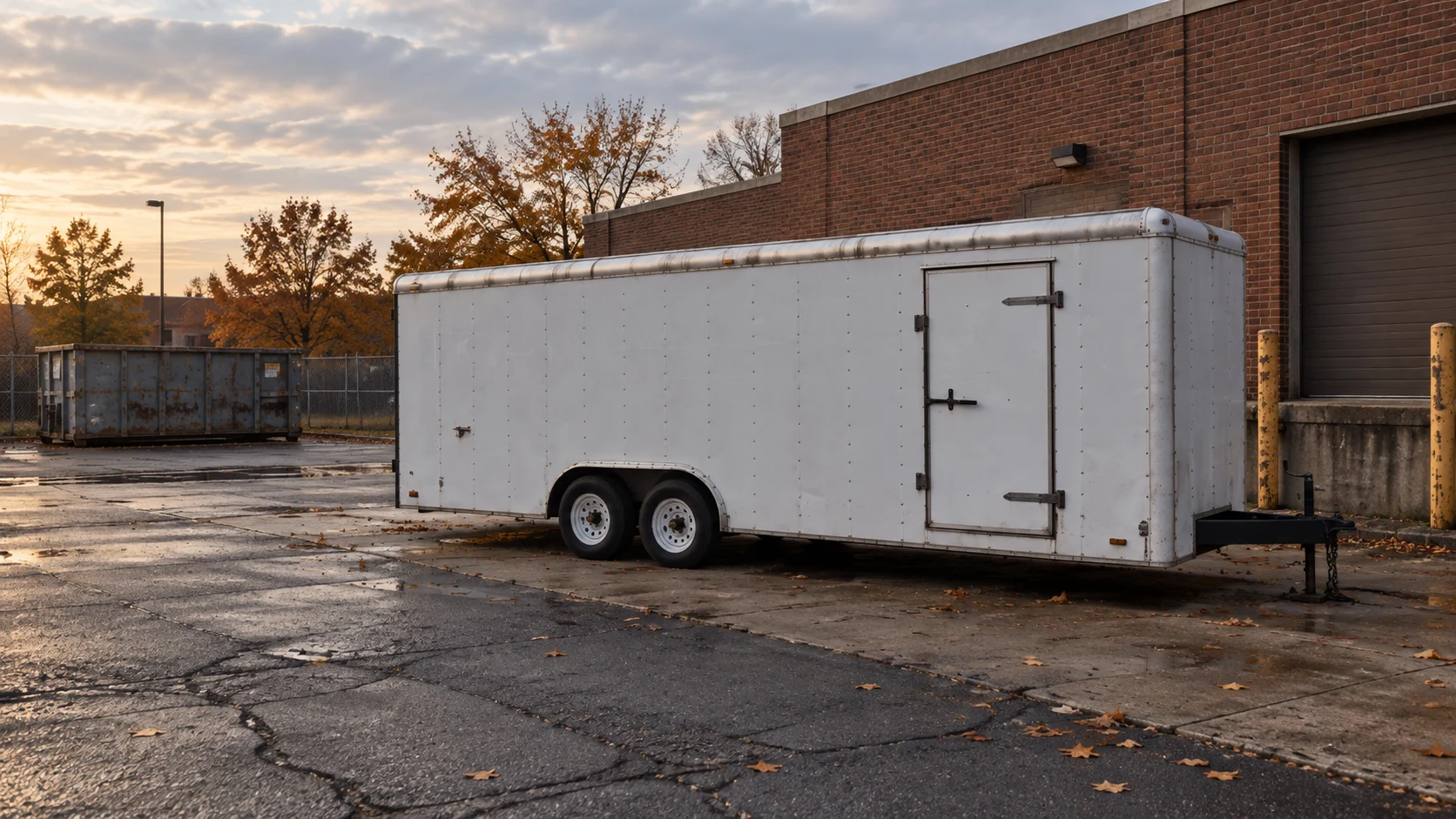
TRAILER REFERENCE · MOBILE 22 × 7 FT UNIT
BUILT TO LEARN
FROM REAL OPERATION.
The pilot is designed to establish what is safe, repeatable, measurable, and useful to a university. The planned operating record covers food-waste inputs, material outputs, environmental conditions, odor observations, labor, and student participation.
ONE WASTE STREAM.
FIVE PARTS OF CAMPUS.
Dining
A defined food-waste stream, separated and prepared for the pilot.
Operations
A practical site, clear access, and a process that fits campus routines.
Sustainability
Recorded diversion and an understandable story of where materials go.
Research
A setting for structured questions, repeatable observations, and learning.
Students
Opportunities to participate in operations, research, and communication.
MOBILE IN FORM.
LOCAL IN PURPOSE.
A trailer can connect food collection, a processing site, and opportunities for learning. Feeding, rearing, and harvesting happen at the operating site on their own schedules.
THE MOBILE LAB
Body & chassis
Photo referenceA long enclosed trailer with a plain white riveted body, rounded roof edge, two axles, rear loading doors, and a side access door. Its compact footprint lets the system become a visible part of campus.
Power from the roof
Proposed roof layoutA proposed solar array sits above the trailer. Panel capacity, battery storage, and equipment demand would determine how much of the operation it could power.
Airflow
Concept placementAir moves through the rearing area to help manage conditions. Fan placement and capacity need to suit the enclosed space, the trays, and the operating conditions.
Access & staging
Photo referenceThe side door is near the front, with double doors at the rear. Access needs to remain clear for people, trays, and material handling.
Inside the unit
Illustrative layoutThe confirmed interior width is 84 inches and ceiling height is 78 inches. Wheel wells reduce usable floor space. Rearing equipment is shown as an explanatory layout, not an exact current installation.
A story you can read
Proposed wrapRecognizable pictures explain food scraps, larvae at work, and useful resources. The W2N wordmark stays prominent; the side of the trailer becomes a simple teaching surface.
A learning display
Proposed media displayA proposed outdoor display could explain the biological process, show pilot measurements, and turn the operating site into a visible learning resource. It is not part of the current installation.
WITHIN THE WALLS
The confirmed interior width is 84 inches and ceiling height is 78 inches. Wheel wells reduce usable floor space. Rearing equipment in the model is an explanatory layout, not an exact current installation.
Prepared food waste and larvae share a tray. Feeding, moisture, airflow, temperature, and harvest are managed and recorded through the cohort.
BIOLOGY AT WORK
Black soldier fly larvae process suitable prepared food waste. These stages are qualitative illustrations; no yield or timing prediction is made.
Prepare — Start with a suitable food stream.
Separate contamination, record what arrives, and prepare a suitable feed. A consistent starting material makes each cohort easier to understand.
Feed — Small larvae. A biological process.
Larvae feed on the prepared material. Feeding amount, moisture, density, and temperature influence the process and must be observed during a pilot.
Grow — Watch what changes.
The larvae grow while the remaining material changes. Record conditions and compare cohorts. Observations help the team understand what works.
Harvest — Separate, measure, learn.
Harvest larvae and separate the remaining material. Record the outputs and assess suitable next uses. Harvest timing depends on the cohort and operating conditions.
WHAT COMES OUT
Larval biomass
Harvested larvae are one output of the process. Possible feed applications depend on suitable inputs, processing, quality, and the requirements for the intended use.
Frass & residue
The remaining organic material is another output. Potential soil uses need appropriate handling, quality assessment, and validation.
Data & education
Input and output weights, operating conditions, power, labor, and participation can support pilot decisions and student learning. The pilot creates evidence for the next decision.
The purpose of a pilot is to find out what works—and record what actually happens.
COULD W2N ANSWER A USEFUL QUESTION
ON YOUR CAMPUS?
Start with the food stream, operating site, research question, and evidence your institution actually needs.
See the MSU pilot ↗Campus pilot planning · Bioconversion research · Student projects
ABOUT THE REFERENCES
The exterior shape is based on photographs shared in June 2026. Later user-supplied interior dimensions inform the model. Artwork, rooftop panel layout, landscape, display, and some equipment arrangements are proposals or illustrations. The site does not assert university endorsement, certified outputs, fixed harvest schedules, or measured production performance.